
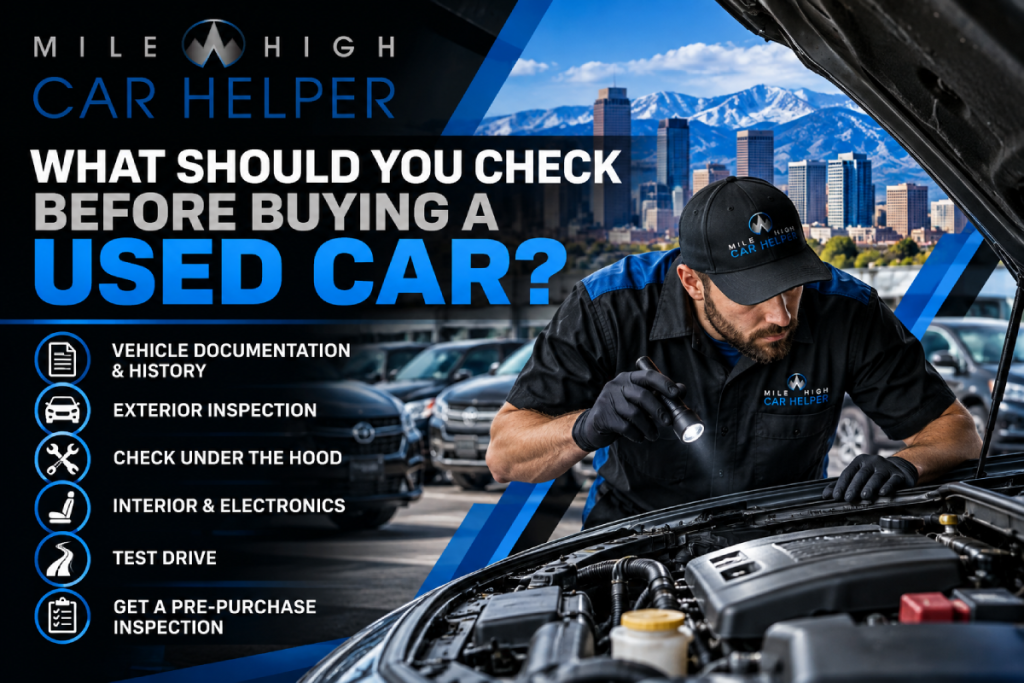
Knowing what to check when buying a used car can help you spot warning signs before they become expensive repairs.
For used vehicle buyers in Denver, Colorado, a careful inspection, thorough test drive, and professional pre-purchase inspection can make the difference between a dependable purchase and a costly surprise.
1. Vehicle Documentation & History
Your used car buying checklist should start before you turn the key. Ask for the vehicle identification number (VIN), title information, maintenance records, warranty details, and a vehicle history report.
Look for reported accidents, salvage or rebuilt title history, flood damage, odometer inconsistencies, and gaps in maintenance. Also verify that the VIN on the dashboard and paperwork matches.
If you’re buying from a dealer, review the FTC Buyers Guide. It tells you whether the vehicle is being sold “as is” or with a warranty and provides important information about warranty coverage.
Don’t rely on a history report alone. Not every mechanical problem, accident, or repair is necessarily documented.
2. Vehicle Exterior Inspection
When learning how to inspect a used car, start by walking around the vehicle in good daylight.
Look at the body from several angles for dents, scratches, rust, mismatched paint, uneven panel gaps, or other signs of previous bodywork.
Check the tires next. Uneven tread wear can point to alignment, suspension, or steering problems. Make sure the tires have adequate tread and inspect the sidewalls for cracks, bulges, or other visible damage.
Look underneath the vehicle for leaks, corrosion, or damaged components. Here in Denver, Colorado, snow, ice, road treatments, potholes, and temperature swings can be hard on a vehicle’s underside, suspension, and steering components.
Kelley Blue Book specifically recommends checking older used vehicles for rust, including underneath the vehicle in areas where road salt may be used during snowy seasons. Source: Kelley Blue Book
Don’t forget the glass and exterior lights. Cracked windshields, moisture inside light housings, or poorly aligned body panels deserve a closer look.
3. Check Under the Hood
You don’t have to be an expert technician to spot obvious warning signs under the hood.
With the engine cool and the vehicle parked safely, look for leaking fluids, damaged hoses, loose connections, heavy corrosion, or signs that components have recently been covered up or cleaned.
Check the engine oil when appropriate. Oil that’s extremely low, contaminated, or showing unusual characteristics can justify further investigation. Look at other accessible fluid reservoirs and check around the engine and transmission for signs of leakage.
Pay attention when the engine starts, too. Listen for knocking, ticking, squealing, or unusually rough operation.
A buyer’s visual check is useful, but it isn’t a replacement for professional diagnosis.
4. Inspect Interior & Electronics
The interior can tell you a lot about how a vehicle was treated. Excessive seat, steering wheel, or pedal wear compared with the reported mileage deserves attention.
Turn the ignition on and make sure the dashboard warning lights illuminate normally and then behave as expected after startup. A check engine light, ABS, airbag, battery, or other warning light that stays illuminated should be investigated before you buy.
Test the air conditioning, heater, power windows, locks, mirrors, seats, infotainment system, backup camera, charging ports, windshield wipers, headlights, turn signals, and other electronics.
Also smell the interior. Strong musty odors, damp carpeting, water stains, or unusual corrosion can indicate previous moisture or water intrusion.
5. The Test Drive
Never judge a used vehicle from a five-minute trip around the block. Perform a test drive under varied conditions, including hills, highways, and stop-and-go traffic.
Denver drivers should try to include city streets and highway speeds when practical. Pay attention to how the vehicle accelerates, shifts, brakes, steers, and responds over different road surfaces.
Listen for clunks, rattles, grinding, squealing, or humming noises. Notice whether the steering wheel pulls to one side or shivers at speed. Braking should feel controlled without unusual vibration, pulling, or noise.
Watch the gauges and dashboard during the drive. If a warning light appears, the temperature rises unexpectedly, or the transmission hesitates or shifts harshly, don’t ignore it.
6. Get a Pre-Purchase Inspection From a Trusted Mechanic
The final item on any used car inspection checklist should be a professional pre-purchase inspection, often called a PPI.
Have an independent, trusted mechanic evaluate the vehicle before you finalize the purchase. A qualified vehicle technician can inspect areas that are difficult for buyers to assess, including the brakes, suspension, steering, engine, transmission, fluid leaks, underbody, tires, electrical systems, and diagnostic trouble codes.
Ask your mechanic for the findings in writing when possible. If the inspection identifies worn brakes, leaking components, suspension problems, or upcoming automotive maintenance service, you can use that information to understand potential ownership costs, discuss repairs with the seller, or decide the vehicle isn’t right for you.
If a seller won’t allow a reasonable independent inspection, consider that an important warning sign.
Buy With Confidence at Mile High Car Helper in Denver, CO
Don’t let shiny paint or a short test drive make the decision for you. Check the history, inspect the exterior and interior, look under the hood, test-drive the vehicle thoroughly, and have a trusted professional inspect it before money changes hands.
At Mile High Car Helper, we’re a used-car dealer and complete auto repair service center serving Denver, Colorado. With locations on Acoma Street and South Broadway, we combine Used Car Sales with full-service automotive repair, transparent pricing, and guidance from experienced technicians.
Whether you’re shopping for your next vehicle or need a trusted local Denver mechanic shop to perform a pre-purchase inspection, we’re here to help you understand what you’re buying.
Schedule an inspection with Mile High Car Helper before committing to your next used vehicle.
Contact Mile High Car Helper at 303-276-0259 or reach our Facebook page.
Frequently Asked Questions
What should you check first when buying a used car?
Start with the vehicle’s VIN, title, maintenance records, and vehicle history report. Look for accident history, salvage or rebuilt titles, flood damage, odometer discrepancies, and missing maintenance records. Confirm that the VIN matches the vehicle’s documentation.
What are the biggest red flags when buying a used car?
Common warning signs include uneven tire wear, fluid leaks, rust, mismatched paint, dashboard warning lights, unusual engine noises, rough transmission shifts, and signs of water damage. A seller who refuses an independent inspection is another major red flag.
How do you inspect a used car before buying it?
Inspect the exterior, tires, undercarriage, engine compartment, interior, and electronics. Review the vehicle’s records and take a thorough test drive. For a complete evaluation, arrange a professional pre-purchase inspection with a qualified mechanic.
Is a pre-purchase inspection worth it for a used car?
Yes. A pre-purchase inspection can uncover mechanical problems that aren’t obvious during a test drive, including brake wear, suspension damage, fluid leaks, and diagnostic trouble codes. The findings can help you negotiate repairs, estimate ownership costs, or avoid a costly purchase.
What should Denver drivers look for when buying a used vehicle?
Denver buyers should pay particular attention to underbody corrosion, suspension wear, steering components, tire condition, and cold-weather performance. Snow, ice, potholes, and winter road treatments can contribute to wear that deserves professional inspection.
Where can I get a used car inspected before buying in Denver, CO?
Mile High Car Helper offers automotive repair services and pre-purchase inspection assistance in Denver, Colorado. With locations on Acoma Street and South Broadway, the team can help buyers evaluate a vehicle’s mechanical condition before committing to a purchase.